
INSTALLATION IN SECONDS.
Raptor Couplers are designed to provide a simple connection between reinforcing bars in high-rise construction and major civil construction projects.
Raptor Couplers are the easy-to-install, easy-to-attach coupler that reduces preparation time, worksite time and materials cost. One of the most significant innovations in concrete reinforcement in recent years. With its first generation already proven on major construction projects in Australia, the latest generation of the Raptor Coupler demonstrates that striving for simplicity can deliver amazing results.
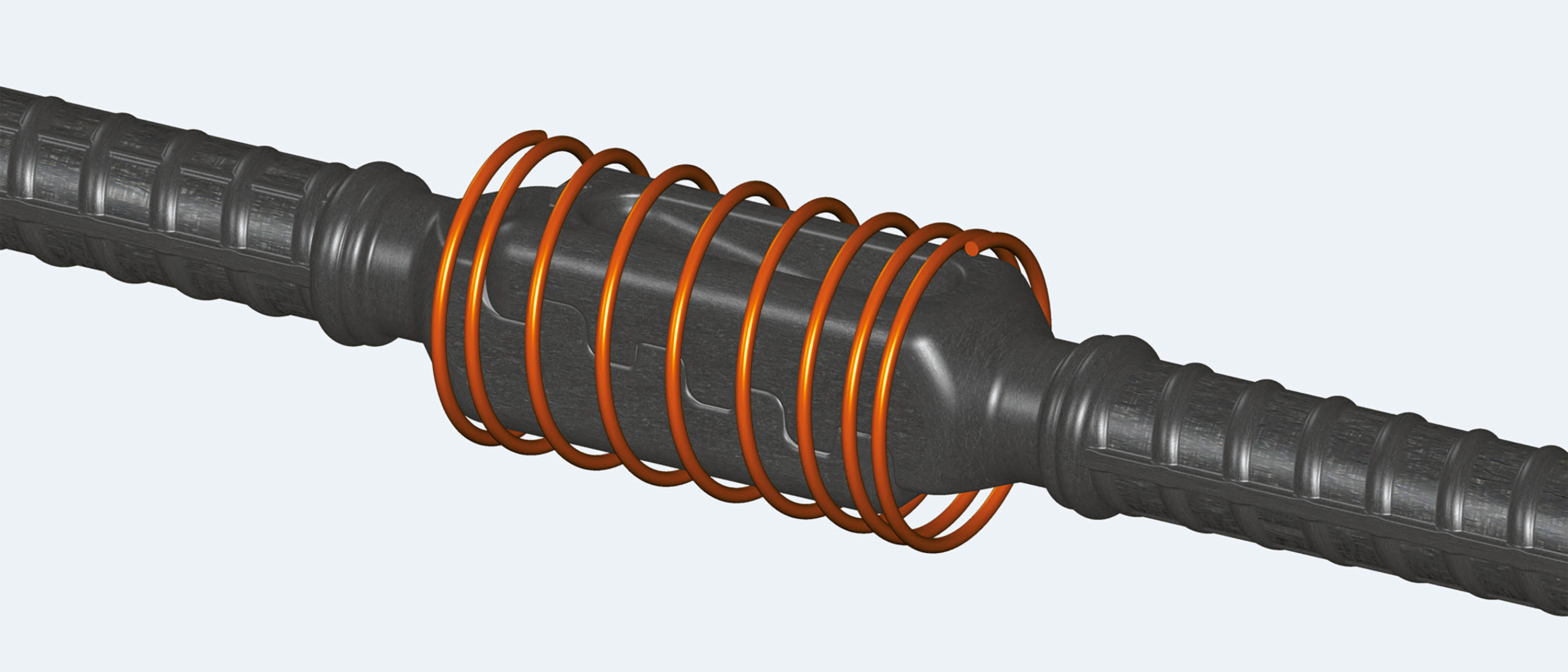
No Tools – Raptor Couplers are the ONLY joining system that does not require any tools
Safer – Not necessary to rotate heavy bars, or risk injury from tools
Time Saver – Installation enabled in seconds, saving time AND money
Efficiency – Contributes to the minimisation of transport loads through less material
Sustainable – Saves on steel by eliminating lapping PLUS Raptor Couplers are manufactured from recycled steel.This is some text inside of a div block.
EXISTING JOINING REINFORCING BARS.
Lap Splicing
Raptor Couplers provide a cost effective, simple and quick solution to traditional lapped connections and threaded couplers. Lapped connections have become the traditional method of connecting steel reinforcing bars. Lap splicing is the process of joining two rebar sections together by overlapping their ends and joining them together; either by welding or through the use of metal ties.
However lap splicing has significant disadvantages:
Lap splicing generates significant steel wastage – the lap length is commonly required to be at least 40 times the diameter of the rebar
The length of the lapping is further impacted by the strength of the surrounding concrete
Lap splices add more congestion in the concrete
Lap splicing is labour-intensive and time-consuming, both significant factors impacting construction costs.
Threaded Coupler
The majority of construction projects continue to use the lap splicing method. To overcome the disadvantages of lap splicing, mechanical splicing has been introduced. This sees the use of an attached coupler joining two ends of rebar together without the need for overlapping. Whilst providing significant engineering performance benefits and impacting costs by reducing the quantity of rebar that would normally be wasted in lapped joins and through an increase in the speed of installation, threaded couplers also present disadvantages:
Requires the use of tools for installation
Difficult to install in restricted spaces
Time consuming installation
Can present installation quality control issues.


The coupler overcomes many of the costly and time-consuming disadvantages of standard threaded couplers. And is the first truly competitive alternative to standard lapped joins.
THE ANATOMY OF A RAPTOR COUPLER.
Friction Welded
The Australian-designed Raptor coupler head is friction welded to the steel reinforcing bar. Friction welding is a well-established process used in critical applications in the aerospace and automotive industry. Extremely fast, it does not heat the high yield reinforcing bar to high temperatures leaving characteristics of the reinforcement unchanged.
Locking Spring
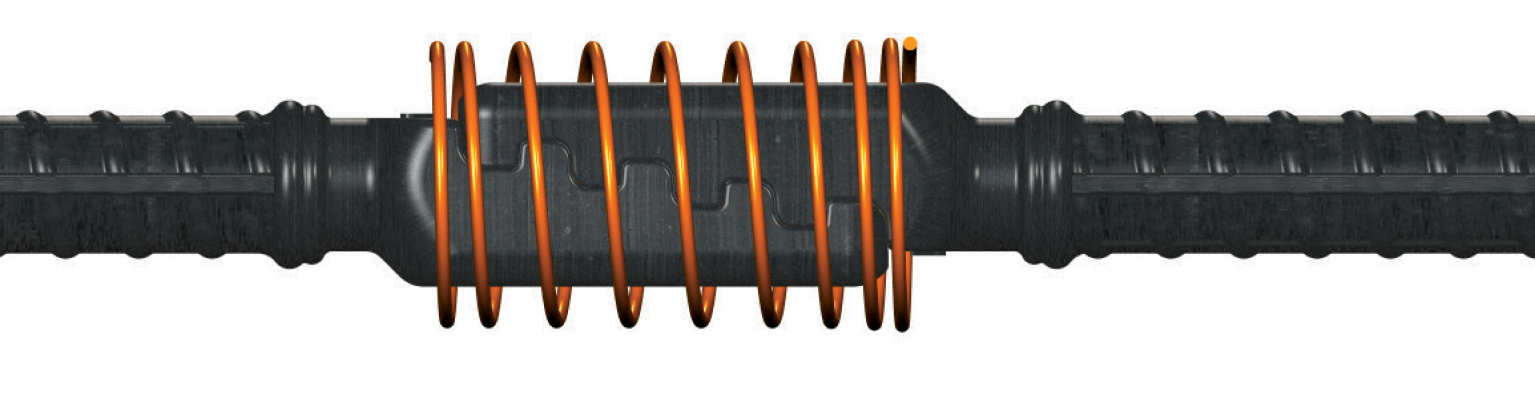
Unlike time-consuming threaded couplers, the overall assembly of the Raptor Coupler on site is designed to be completed in seconds, with the simple joining of the two Raptor coupler heads together and sliding of the locking spring into place.
Precision Machined
The coupler is cast and then machined to deliver the required tolerances to avoid slip in the joined head.
Engineered Interlocking Shape
The teeth are smartly configured to ensure no misalignment is possible. And Quality Assurance is simple - correct joining is capable of visual inspection.
RAPTOR VOIDFORMER
Specialised Void Formers have been developed to work alongside the Raptor Hook and L-Bars in sizes 16mm and 20mm.
The Raptor Void Former effectively leaves a Raptor head “hidden” in the concrete after the first concrete pour and once concrete sets, the contractor simply removes the Raptor Void Former away from the Raptor head. The need to leave starter bars or development lengths protruding out of concrete walls is a thing of the past.
RAPTOR HOOK BAR
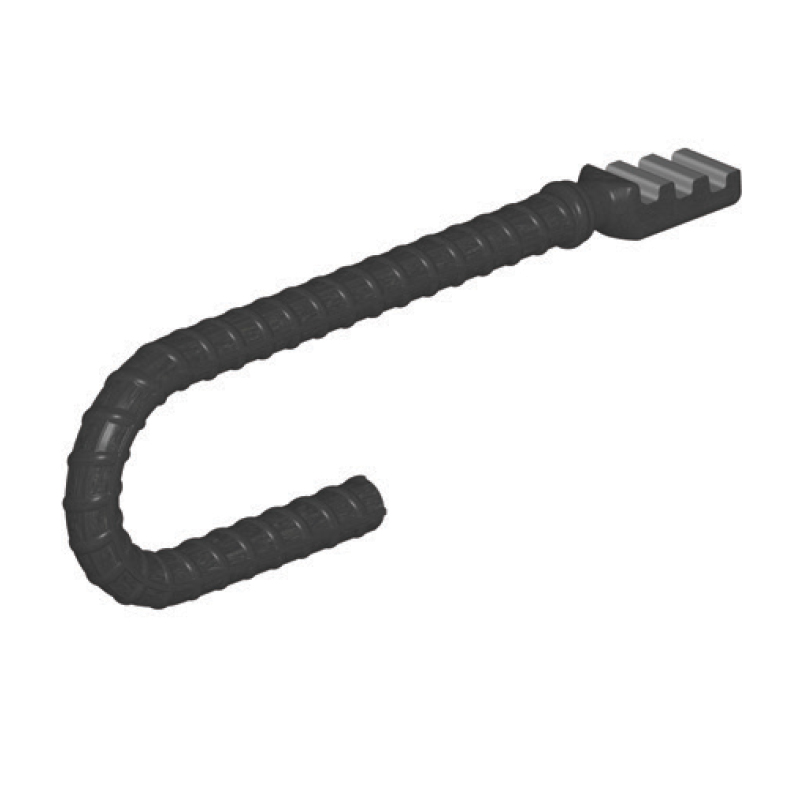
The Raptor Hook Bar is a 180 degree hooked bar with a Raptor coupler head designed for adjacent joins in concrete structures and can be a replacement for pull-out bars. This application may be used with a standard size board with Void Formers attached to the board at desired centres, top and bottom.
On the first concrete pour, the Raptor Hook may be installed in any position within the wall cavity. It makes work much easier for wall to floor joins with many typical floors. When the wall concrete sets, removing the standard size board with Void Formers exposes the head of the Raptor Hook. Its development length or starter bar can then be attached when ready to pour the adjacent slab. The starter bar is retained on the hook bar with a helical spring that simply slides into position in seconds to hold the bars prior to the second concrete pour.
RAPTOR L-BAR
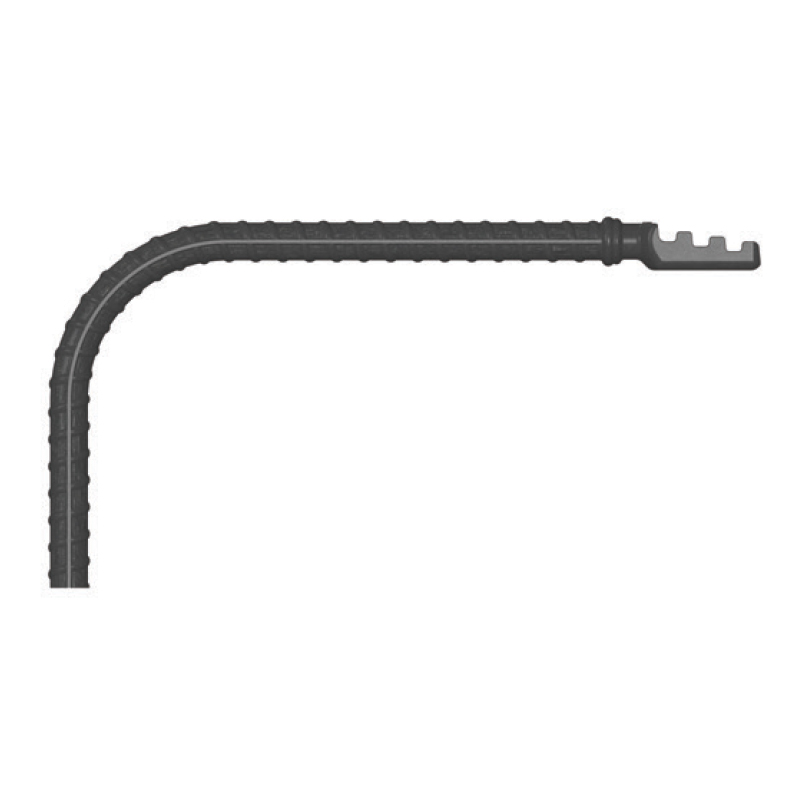
The Raptor product range is diverse enough to satisfy a significant amount of any major contractor’s requirements in vertical elements for high-rise construction – i.e. walls and columns. The use of Raptor L-Bars in diaphragm wall construction is an excellent option for contractors as the Raptor coupler installation is less labour intensive than any other available coupling system, providing a practical solution and speeding up the construction process.
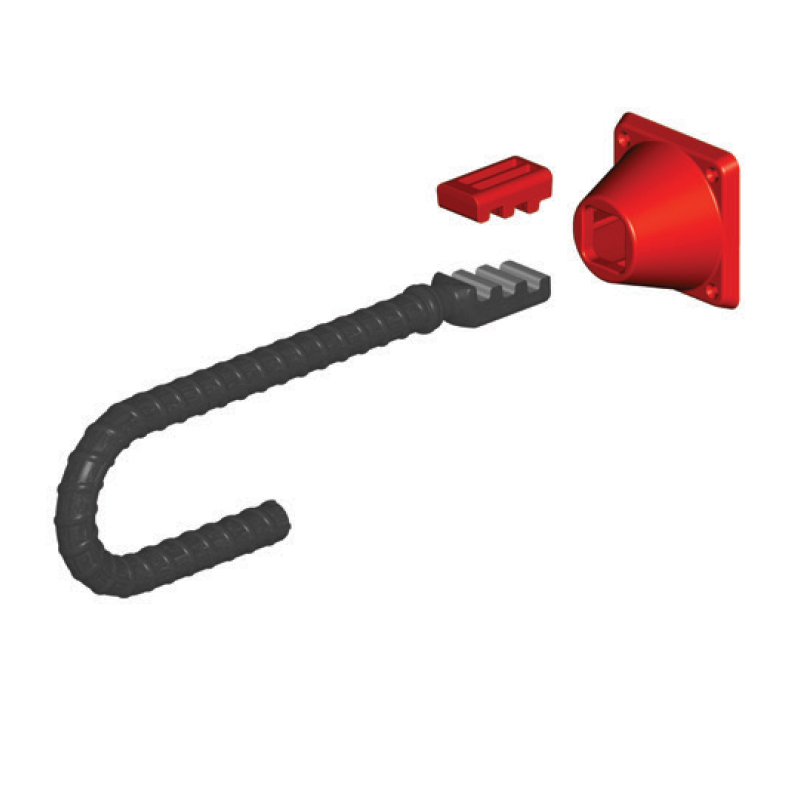

Builder: Leighton Abigroup Joint Venture
“The use of the Raptor Void formers system with Raptor couplers reduced costs and provided an elegant engineering solution for a ‘wall to floor’ join”.
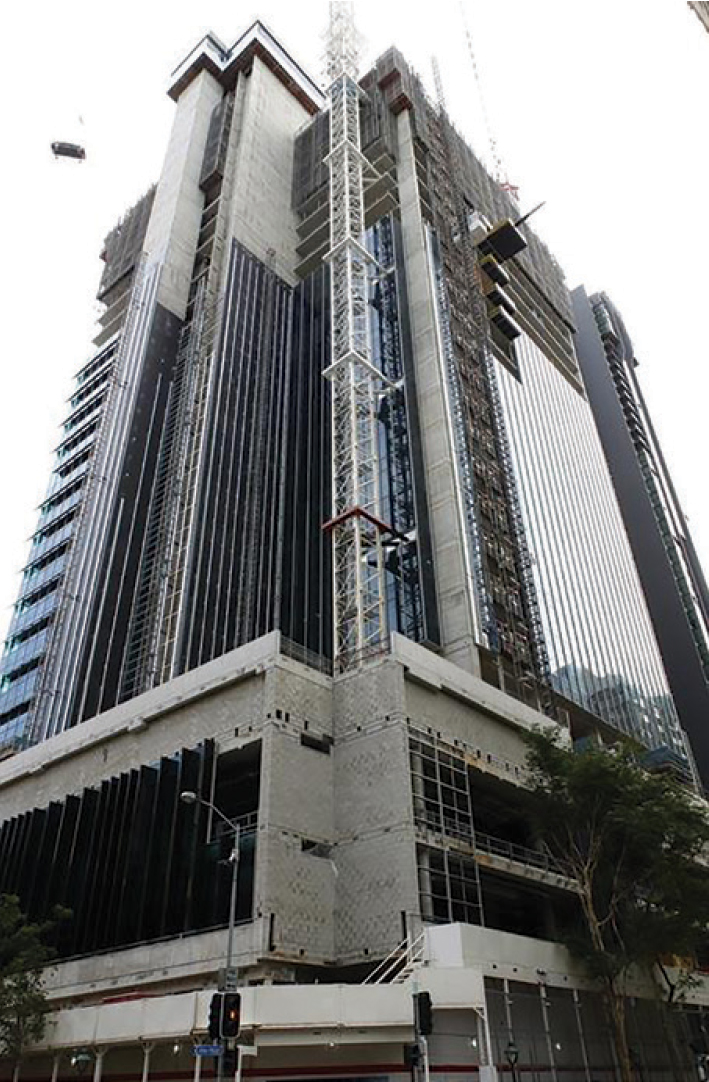



(123 Albert Street, Brisbane)
Builder: Laing O’Rourke
“The use of Raptor couplers’ technology simplified construction, saved steel and reduced construction cost”.
Builder: Brookfield Multiplex
“We were impressed with the ease of connection and how fast they are to connect”.
Builder: FKP
“We would use it again. The product is easy to use”.
Builder: ADCO Constructions
“The Void Former is a brilliant way of fixing crane penos; it’s dead easy”.
MEETS THE HIGHEST TESTING STANDARDS.
EXCEEDING THE BEST STANDARDS.
Independent testing of the Raptor Coupler range was undertaken at NATA Registered Melbourne Testing Services. Raptor couplers passed New South Wales RMS requirements for mechanical couplers and aspects of ASTM A1034/A1034A-10A requirements mainly relating to compression loads.
The Raptor coupler also meets the requirements of ISO15620 – Friction Welding of Metallic Materials.
Most critically, the entire range of Raptor couplers fully complies with the international standard for mechanical couplers, ISO15835.
The ISO test method specified for mechanical splices is:
Monotonic Tension Test
Monotonic Compression Test
Cyclic Load Test
High-Cycle Fatigue Test
Slip Test
The low cycle load tests stipulated by the ISO 15835 standard simulate elastic reverse loading of a reinforcing system during earthquakes. Raptor couplers have passed the highest category of these tests - LC1 and LC2 for violent earthquakes.
Further in-concrete tests were performed in addition to the above tests for Compression, Tension and Shear. These tests proved that the Raptor coupler operates as continuous reinforcement.
SIMPLE INSTALLATION. MULTIPLE APPLICATIONS.
The Raptor coupler has set a new benchmark for steel reinforcing bar coupling systems.
Strength: Bar break – head strength > 700MPa
Ductility: Bar break, Agt > 1.03
Precision: Less than 1mm Slip – meets ISO Standard 15835 and NSW RMS requirements
Seismic: Suitable for seismic applications
Passes ISO 15835 and NSW RMS requirements
Received an Engineering Excellence Award for Innovations and Inventions.
There are many applications for Raptor couplers that are project specific. These include:
Walls for medium and high-rise buildings
Bridge deck construction and pedestrian barriers
Horizontal to vertical joining systems
Diaphragm wall construction
Columns for high-rise buildings or bridges
Concrete dam construction.
Contact: Derek Brown
.png)
derek@raptorcouplers.com

CALL
+44 (0) 7880 558678